Product definition
Define product type, specification, net weight, packaging, preparation level and storage conditions. Compare whole, prepared and semi-finished ingredients on an appropriate basis.
CAPABILITIES
Coordinate ingredient supply through clear specifications, quality controls and traceable handovers.
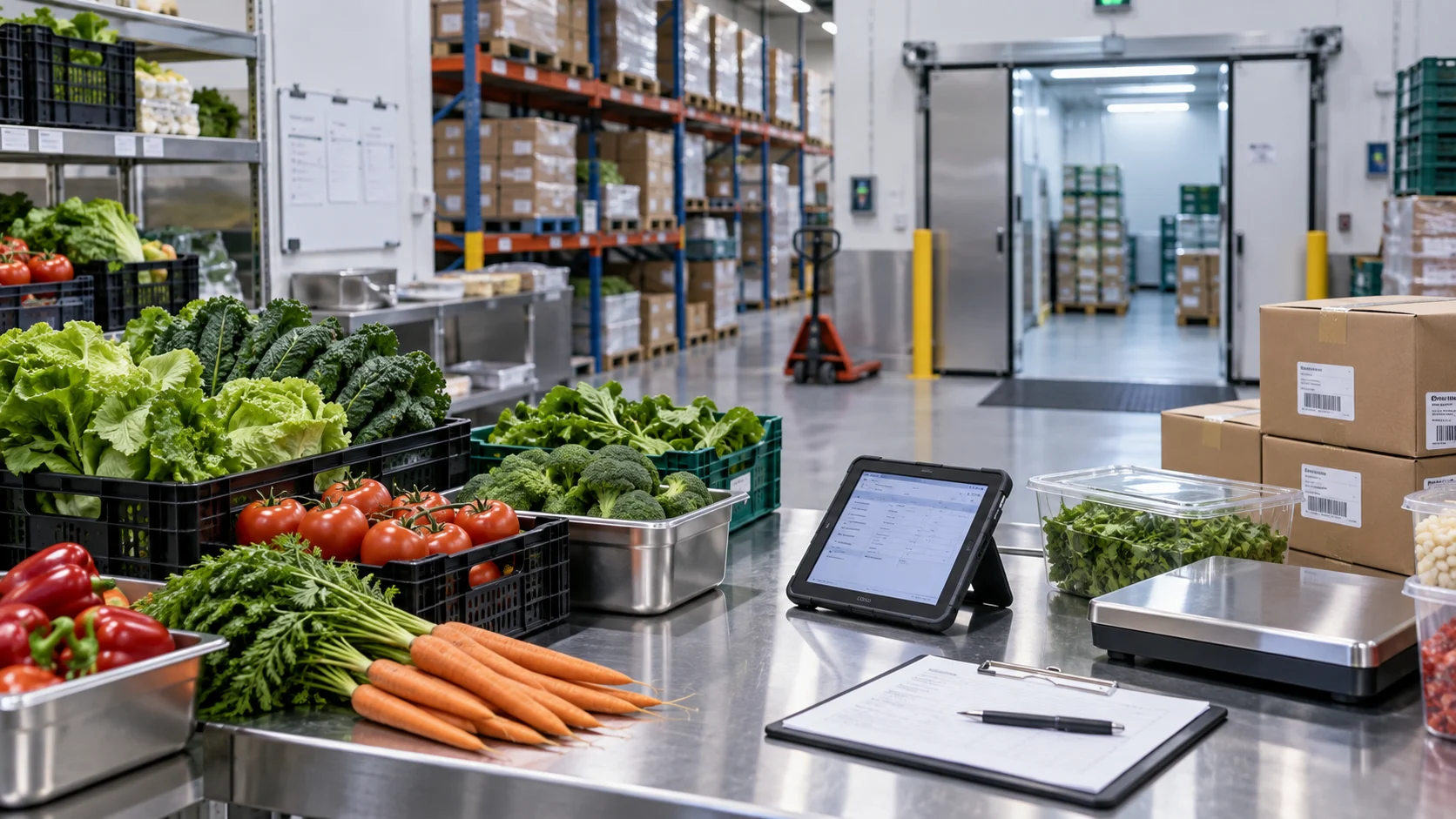
The catering supply chain is a distinct business and a connection in reliable meal delivery. Work backwards from menus and service schedules to ingredient specifications, delivery windows and quantities, linking sourcing, preparation, storage and site receipt.
Separate confirmed orders, forecasts and urgent replenishment. Check usable stock, incoming deliveries and shelf life. Pass menu, holiday and shift changes upstream; return supply constraints to menu and site teams for approved alternatives. Good planning depends on timely, complete information rather than excess inventory.
Clear specifications reduce delivery ambiguity. Use consistent names and units across quotations, orders, receipt and settlement. Keep an approved version whenever a specification changes.
Define product type, specification, net weight, packaging, preparation level and storage conditions. Compare whole, prepared and semi-finished ingredients on an appropriate basis.
Review supplier identity and relevant documentation alongside delivery performance and corrective actions. Track pricing and quality separately, with alternatives and exit arrangements.
Distinguish purchase price, usable yield, processing loss and transport cost. Normalise units before comparing cost against actual output.
Company materials describe 一城一地 as a prepared-ingredient business, with sorting, washing, processing and packing. Project design clarifies the delivered condition, the work remaining at the kitchen, and implications for storage, equipment and timing.
Link processing instructions to ingredient batches, cutting specifications, pack units and destinations. Labels need a clear product identity and storage instructions; washed ingredients are not automatically ready to eat. Trial preparation checks portioning and dish suitability before agreeing yields and order units. Retain project-specific requirements even when ingredients are shared.
BUSINESS IN CONTEXT
Ingredient supply, distribution coordination and kitchen demand are connected. Specifications, preparation formats and delivery arrangements respond to kitchen needs, with feedback reaching suppliers and quality information spanning the relationship.

Organise storage by food category, conditions, batch and status. Distinguish stock awaiting inspection, accepted stock, returns and rejected goods. Consider shelf life and release status when issuing stock; quarantined goods are not available inventory.
Assess temperature control through receipt, holding, loading, transport and handover. Records should identify the measurement point, time and instrument, distinguishing ambient from product readings. Review excursions in the context of the batch and process. A return to the target reading does not itself authorise release.
Begin traceability with the previous source and next recipient, then connect orders, batches, processing and use. Investigate affected quantities and destinations before interpreting supporting reports or images.
Check the sample, scope and date of third-party testing. Receiving checks and supplier documents serve different purposes; historical reports do not establish the status of current batches. Retain containment, return, disposal and verification records. Feed recurring issues back into supplier review and purchasing specifications.
Agree whether the scope covers raw, prepared or semi-finished ingredients and transport, and assign receiving, processing and inventory responsibilities. Start with a catalogue, specifications, delivery windows, acceptance conditions and exception contacts. Validate representative categories before expanding the catalogue.
Organise product, supplier, site and batch identifiers before connecting order data. The source materials recorded the AI supply-chain application as Alpha-stage and not publicly available at that time; this does not establish its current availability. Forecasting proposals require suitable records, trials and human review; any delivery scope must be agreed for the project.
Translate relevant guidance into project responsibilities, records and checks. Verify applicability during assessment; references are not evidence of Group certification or project outcomes. Historical interfaces, dates and figures reflect the source material at that time, not current system availability or operating metrics.
The 2018 SAMR operational guidance provides an industry framework for ingredients, preparation, service, cleaning and records.
ExploreThe SAMR interpretation hosted by Suzhou’s regulator explains supplier evaluation, receiving, storage and equipment maintenance.
ExploreThe 2017 traceability provisions distinguish business types. Non-prepacked restaurant food is outside direct application; its record-linking approach may be used as a reference.
Explore