Ingredient route
Connect receiving and storage to appropriate preparation zones, with clear washing arrangements, holding locations and tool identification.
CAPABILITIES
Coordinate space, equipment, processes and people for practical, verifiable kitchen operations.
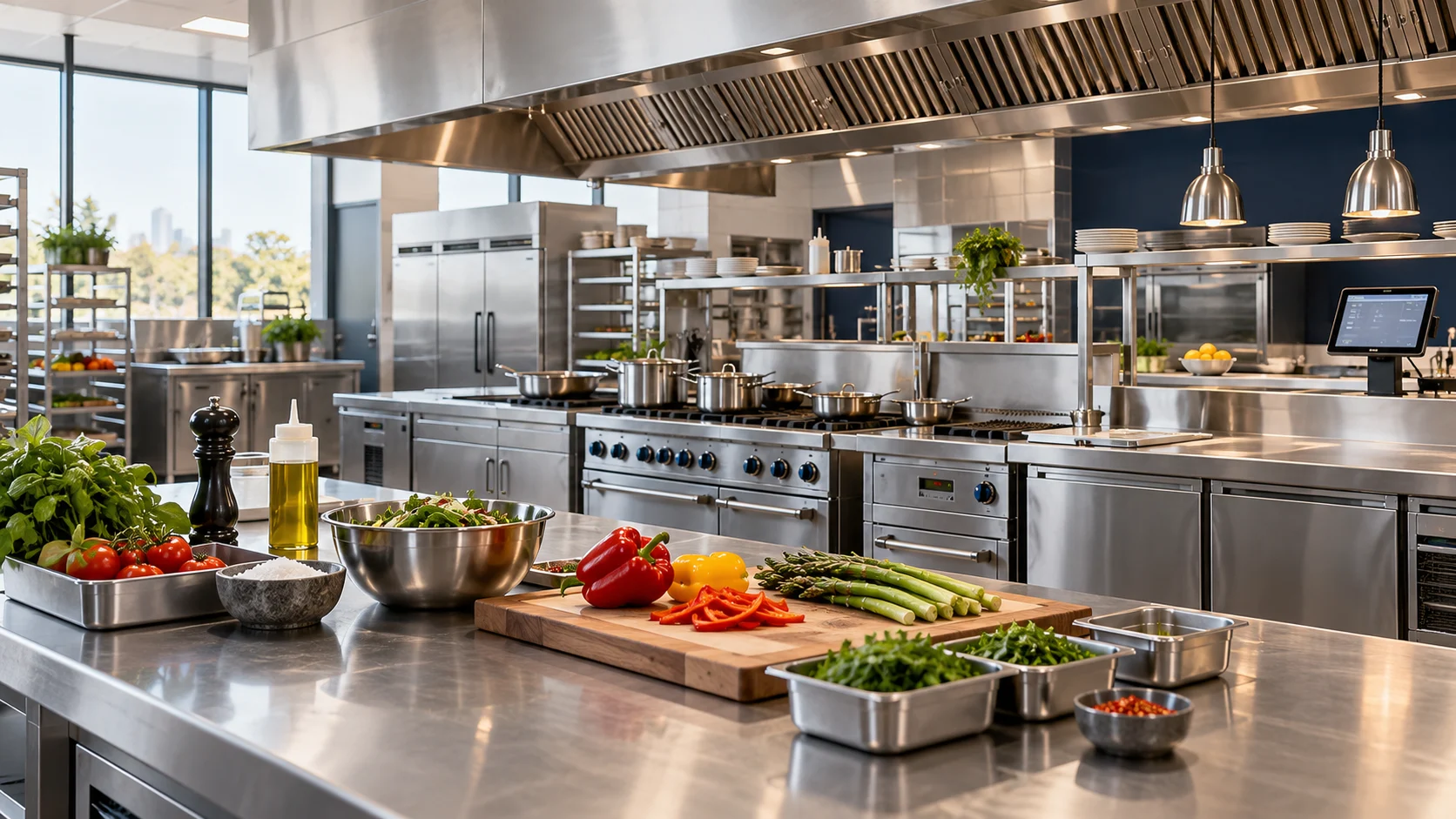
Smart kitchens form a distinct business focused on coordinating space, equipment, people and processes. Start with menus, preparation depth, meal schedules and service formats, then assess resources for receiving, storage, preparation, cooking, assembly and washing.
Nameplate equipment capacity is not the same as site throughput. Examine ingredient readiness, preparation pace, cooking batches, dispatch and washing turnaround to identify constraints. Define operating conditions, facility limits and commissioning arrangements before selecting digital tools or equipment.
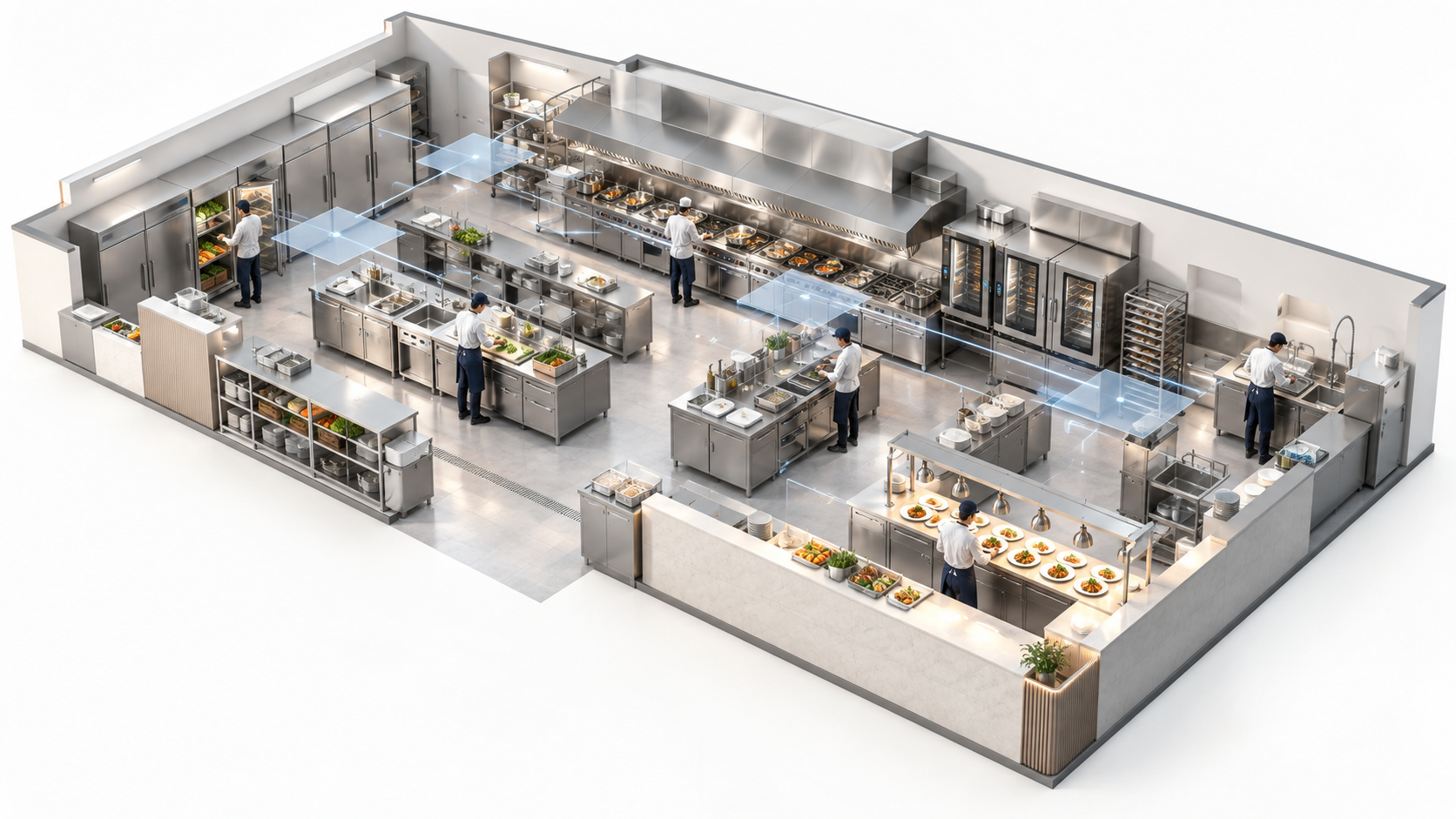
Let workflow determine zoning. Review routes for ingredients, people, finished food, clean utensils and waste together. Constrained sites need assessed separation arrangements rather than visual markings alone.
Connect receiving and storage to appropriate preparation zones, with clear washing arrangements, holding locations and tool identification.
Connect cooking, holding, portioning and service. Review protection and handover conditions while separating finished meals from returns and waste.
Separate returned, washed, disinfected and protected utensils. Assess washing turnaround and clean-storage capacity, including post-service peaks.
Translate menus into task plans covering ingredient condition, equipment, role, batch size, completion time and dispatch order. Schedule shared equipment without compromising appropriate work zones or utensils.
Plan backwards from service, allowing time for receiving, preparation, checks and handover. Define who confirms replenishment and extra meals. Where work boards are used, they should show current tasks, the next batch and exception owners while retaining human judgement and verification.
BUSINESS IN CONTEXT
Kitchen activities happen in parallel. Space, equipment and teamwork support meal production, while digital management provides an information layer linking tasks with on-site records.
Assign cleaning and disinfection by object, method, frequency and responsibility. Distinguish food-contact surfaces, equipment interiors, drainage, storage and personal hygiene. Routine cleaning, product changeovers and contamination events need appropriate procedures.
Check method suitability, correct product use and protection after cleaning. Link process or facility issues to potentially affected food and time periods. Contain the risk first, investigate and verify corrective action. Images support review but do not replace required on-site checks or specialist assessment.
Select equipment for process needs and maintainability. Data should clarify availability, responsibility and meal-service impact rather than maximise the number of monitoring screens.
Identify equipment by location, purpose and maintenance status, with relevant calibration records. Update associations after replacements so historical readings remain interpretable.
Where equipment alerts are configured, set thresholds for the process and track detection, acknowledgement, action and verification. Distinguish network or sensor faults from food-related deviations and use manual checks when needed.
Where reliable metering exists, review resource use by equipment, time and output, separating standby from production. Validate proposals against the process before claiming savings.
Move from site assessment and workflow design through configuration, training, trials and issue verification. Deliver layout and flow drawings, equipment and task lists, role instructions, cleaning schedules and exception procedures. Appropriate responsible parties undertake construction and installation.
Test actual menus and representative peaks from receiving to service, returns and cleaning. Acceptance must demonstrate practical operation, accountable exception handling and maintenance arrangements as well as digital records. Use trial and operating evidence to refine procedures and training.
Translate relevant guidance into project responsibilities, records and checks. Verify applicability during assessment; references are not evidence of Group certification or project outcomes. Historical interfaces, dates and figures reflect the source material at that time, not current system availability or operating metrics.
The 2018 SAMR operational guidance provides an industry framework for ingredients, preparation, service, cleaning and records.
ExploreThe SAMR interpretation hosted by Suzhou’s regulator explains supplier evaluation, receiving, storage and equipment maintenance.
Explore